


|
www.thejewishweek.com
|
||||||||
|
NY Resources
|
Home > Editorial & Opinion > Opinion
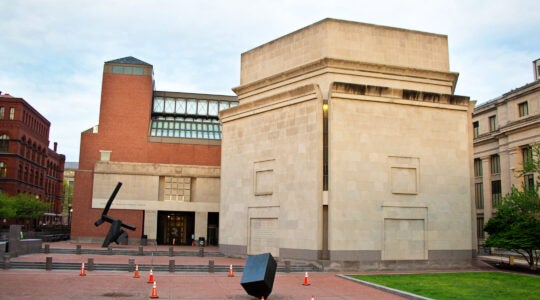
Education As An Antidote To Holocaust Fatigueby Andrew Goldsmith The crux of his argument isn’t new — it has been discussed in whispers in academic and institutional hallways, and one commentator recently coined the terminology “Holocaust fatigue.” Yes, it was a cataclysmic event in world history, the I worry about this perception – did we do something wrong? Mind you, I am surrounded by lay leaders and professionals (many of whom are survivors or children of survivors) who have dedicated great portions of their lives and personal resources to the singular mission of remembrance. My chairman, Eli Zborowski, is most responsible for the creation of Yom Hashoah. Before meeting him, I had thought such things were instituted by acts of Congress, not through the efforts of an individual. Great monuments have been built, world-class museums established and the Holocaust’s place in history enshrined within the Jewish and the greater world’s consciousness forever. And that’s the issue. Like most things done well, we take it for granted. And then, something comes along to remind us why we have invested so much. When Columbia University invited Iranian President Mahmoud Ahmadinejad, I privately shared the same outrage of so many in my community. Doing what I do, freedom of speech arguments did little to assuage my anger. For us at Yad Vashem, we always remember that in 1933 another demagogue also threatened to destroy my people. He also wasn’t taken seriously until it was much too late. Rightly or wrongly, and following a firestorm of protest, Columbia President Lee Bollinger determined to move forward with the invitation. All other issues aside, he made one comment of critical importance: he referred to the Holocaust as the “most documented event in human history.” As a community, we have made great investment in Holocaust remembrance and education. Yad Vashem alone receives a million visitors a year at its Jerusalem campus in a nation of less than 6 million people. These visitors include virtually every visiting head of state, diplomat, school child, soldier and tourist. And no one leaves Yad Vashem unchanged. I have learned much from the survivor community, but most of all, it is the need to educate. Survivors tirelessly tell us of their experiences, sometimes at great personal cost to themselves. I know of one survivor for whom it takes a week to recover after speaking on the topic — the experiences, 60 years later, continue their physical toll. And yet she insists on speaking, on giving testimony. Holocaust fatigue, if that’s the accepted term, may be an issue for the greater community to address. But imagine for a moment how different Lee Bollinger’s introduction would have been if 6 million testimonies weren’t being told, retold and continually remembered. Sometimes, it takes an outside force to remind us of our foundations. There always will be evil people of power who challenge even those most sacred communal memories. And may there always be holy places like Yad Vashem to provide the truth. n Andrew Goldsmith is the executive director of the American Society for Yad Vashem. |
![]() ![]()
|
||||||
© 2000 - 2008 The Jewish Week, Inc. All rights reserved. Please refer to the legal notice for other important information.


Print this Page